Mortgage Rate Volatility in April 2026: Should Buyers Lock Their Rate Now or Wait for a Better Window?
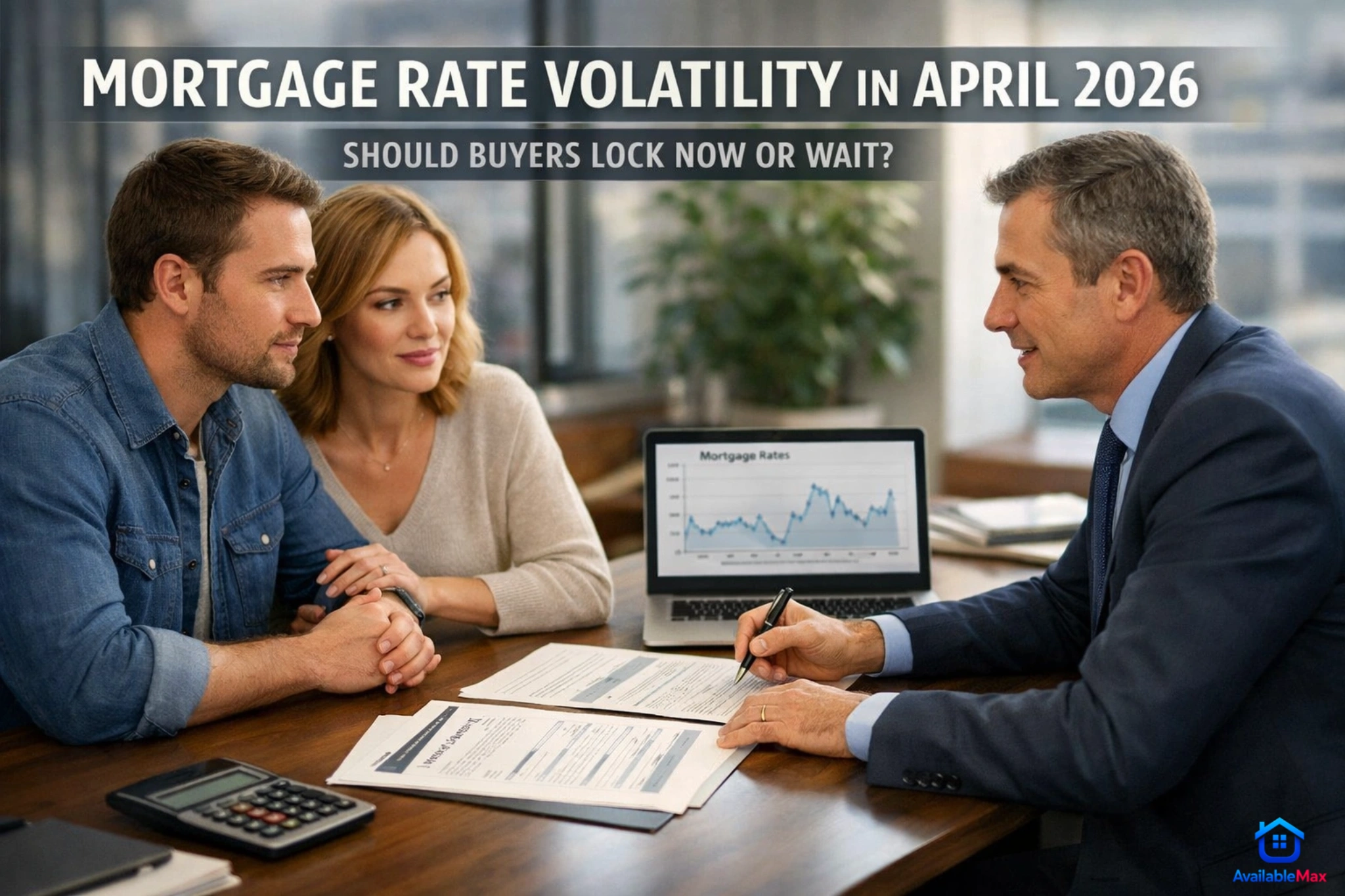
In April 2026, one of the biggest questions for homebuyers is no longer just “Can I find the right home?” It is also “Should I lock my mortgage rate now, or wait and hope for a better window?”
That question matters because even a small rate move can change monthly payment, cash flow comfort, and long-term affordability more than many buyers expect. When rates are moving week to week, timing becomes part of the buying strategy. For serious buyers under contract or close to making an offer, the lock decision can affect the economics of the deal immediately.
This guide explains what mortgage rate volatility means in practical terms, why it matters so much in spring 2026, when locking now may make sense, when waiting may still be reasonable, and how buyers should think through the decision before they commit.
Disclaimer: This article is for educational purposes only and does not constitute legal, tax, lending, underwriting, financial, or investment advice. Mortgage rates, lender policies, lock periods, float-down options, fees, and approval standards vary by lender, loan program, borrower profile, and market conditions. Buyers should confirm all mortgage terms directly with a licensed lender and qualified professionals before making a financing decision.
How to use this guide: Read this article while keeping your timeline in mind. A buyer planning to close in two to four weeks should think very differently from a buyer who is still browsing homes with no active contract. The best lock decision depends on how close you are to needing the loan.
1) What Changed in Mortgage Rates This Week
Mortgage rates moved higher again in early April 2026, reminding buyers that rate direction can change quickly. For anyone close to contract or underwriting, that kind of movement is not just background news. It can affect qualification, monthly payment, and the confidence to move forward.
In practical terms, this means buyers should treat financing timing as part of the transaction strategy. A home search may take weeks or months, but the rate environment can change much faster than that.
What buyers should understand:
- Mortgage rates can move noticeably from one week to the next
- Even modest moves can materially affect affordability
- Rate timing matters most once a buyer is close to contract or closing
- A calm plan is usually better than trying to predict every short-term move
Important: When rates are volatile, “waiting a little longer” is not a neutral decision. It is an active choice that carries both upside and downside.
2) Why Rate Volatility Matters More Than Many Buyers Think
Buyers often focus on list price, negotiation, inspection, and closing costs. All of those matter. But during a volatile rate period, financing may become the factor that changes the deal most. A home can still be the right fit at the right price and yet feel very different once the financing math shifts.
That is why rate volatility deserves serious attention. It affects not only the monthly payment but also debt-to-income ratios, reserve comfort, and the psychological confidence a buyer feels before closing.
Why buyers should care about rate volatility:
- It can change the monthly payment quickly
- It may affect qualification or approval flexibility
- It can influence whether the deal still fits the buyer’s comfort zone
- It creates more pressure on timing during an active transaction
Smart buyer mindset: In a volatile market, financing is not just paperwork at the end. It is one of the main variables shaping the real cost of the purchase.
3) Lock vs Wait: What Buyers Are Really Deciding
When buyers ask whether they should lock or wait, they are usually deciding between certainty and optionality. Locking generally means securing today’s available pricing structure for a defined period. Waiting means staying exposed to whatever the market does next.
Neither path is automatically right in every case. The answer depends on transaction timing, financial flexibility, lender options, and how much risk the buyer can tolerate without putting the deal under pressure.
In simple terms:
- Locking: prioritizes protection and planning certainty
- Waiting: preserves the chance of improvement, but keeps downside risk open
Key point: Waiting only makes sense if the buyer can financially and emotionally tolerate a worse outcome as well as a better one.
4) Buyers Who Should Strongly Consider Locking Now
Not every buyer needs to rush into a lock, but some buyers are much better candidates for rate protection than others. If the transaction is active and the numbers are already tight, locking may be the cleaner move.
Buyers who should strongly consider locking now include:
- Buyers already under contract
- Buyers expected to close soon
- Buyers near qualification limits
- Buyers highly sensitive to payment changes
- Buyers who value certainty more than speculation
For these buyers, the goal is often not to beat the market perfectly. The goal is to protect the deal from becoming more expensive than planned.
Practical rule: If a slightly worse rate would make you uncomfortable, locking deserves serious attention.
5) Buyers Who May Still Be Able to Wait
Some buyers may still have room to wait, but only if they are early enough in the process and financially prepared for continued volatility. Waiting is easier when the transaction is not yet committed and the budget has breathing room.
Buyers who may be able to wait include:
- Buyers who are still in the browsing stage
- Buyers without an accepted offer yet
- Buyers with strong payment flexibility
- Buyers who can tolerate some rate movement without losing the deal
- Buyers with lender guidance that supports a later decision window
Be careful: Waiting is only reasonable if the buyer has a real cushion. It should not be confused with hoping that the market will rescue a tight budget.
6) Why Small Rate Moves Can Change the Payment More Than Expected
Many buyers underestimate how much even a modest change in rate can affect the monthly payment over time. The move may look small on paper, yet still change affordability in a meaningful way once the loan amount is applied.
That is why rate conversations should not be dismissed as minor. In a large financed purchase, a small percentage move can create a real difference in monthly carrying cost and total borrowing structure.
Small rate changes can affect:
- Monthly principal and interest payment
- Debt-to-income ratios
- How comfortable the buyer feels after closing
- Whether the home still fits the long-term budget
Best practice: Buyers should ask their lender to compare multiple live scenarios side by side instead of judging the decision by headline rate alone.
7) How the 2026 Housing Market Changes the Decision
The lock decision does not happen in isolation. It happens inside a broader spring market where buyers are also navigating inventory changes, days on market, negotiation leverage, and seller behavior. That means financing strategy should be coordinated with market strategy.
In a market where some homes are sitting longer and some sellers are being more realistic, a buyer may have room to negotiate price, concessions, or credits. But financing still remains critical because a better deal structure on paper can be weakened quickly if the rate environment turns against the buyer.
Why market context matters:
- A buyer may gain leverage on the property side while losing ground on the financing side
- Longer market times do not automatically protect buyers from rate pressure
- Seller concessions may help, but they do not erase financing risk entirely
- The smartest buyers evaluate house strategy and mortgage strategy together
Real-world strategy: A good purchase decision is not just finding a negotiable listing. It is finding a transaction structure that still works if the financing window gets worse.
8) Common Lock Decision Mistakes Buyers Make
Buyers can make good property decisions and still mishandle the financing decision. During a volatile week, the biggest errors usually come from treating the market emotionally instead of strategically.
Common mortgage lock mistakes include:
- Trying to guess the exact market top or bottom
- Waiting without understanding the downside risk
- Focusing only on rate and ignoring fees or lock terms
- Failing to compare payment scenarios clearly
- Assuming more time always means a better outcome
- Not asking whether a float-down option exists
Most expensive mistake: Letting the lock decision drift until the buyer is forced into it under pressure.
9) Questions to Ask Your Lender Before Locking
Buyers should never treat a rate lock as a one-line decision. The right way to approach it is to understand the structure, timing, protections, and tradeoffs before agreeing.
Important questions to ask your lender:
- How long will the lock period last?
- What happens if closing is delayed?
- Are there extension costs?
- Is there any float-down feature?
- What are the fees tied to the lock structure?
- Can you show me payment scenarios if rates improve or worsen?
- Does this lock fit my closing timeline cleanly?
Best practice: Ask for the explanation in plain numbers, not just mortgage language. You want to understand what changes in your payment, your costs, and your risk.
10) Final Checklist Before You Lock a Mortgage Rate
Before locking a mortgage rate, buyers should make sure the decision matches both the transaction timeline and the personal budget. The goal is not to make a perfect market call. The goal is to make a financing decision that supports a successful closing.
Final buyer checklist:
- Know your expected closing timeline
- Confirm whether the current payment still works comfortably
- Compare lock now versus wait scenarios with your lender
- Understand all lock-related fees and timing details
- Ask whether float-down or extension options exist
- Decide how much rate risk you can truly tolerate
- Choose the option that protects your transaction, not just your hopes
Final mindset: Buyers do not need to predict the market perfectly. They need to protect the purchase intelligently.
Last updated: April 7, 2026
FAQ – Locking a Mortgage Rate in April 2026
Tip: These answers provide general educational guidance only. Buyers should verify actual rate-lock terms, costs, and lender policies directly with their lender.
1) What does it mean to lock a mortgage rate?
Locking a mortgage rate generally means securing the lender’s offered pricing structure for a defined period, which helps protect the buyer from market changes during that window.
2) Why are buyers talking about rate volatility in April 2026?
Buyers are focused on rate volatility because mortgage pricing has been moving enough to affect payment, affordability, and confidence during the spring housing season.
3) Should every buyer lock immediately?
No. The right decision depends on timing, budget flexibility, lender structure, and how close the buyer is to closing.
4) Who is most likely to benefit from locking now?
Buyers already under contract, buyers near closing, and buyers who are sensitive to payment increases are often stronger lock candidates.
5) When might waiting still make sense?
Waiting may still make sense for buyers who are early in the process, do not yet have an accepted offer, and have enough financial flexibility to tolerate more rate movement.
6) Why can a small rate move matter so much?
Because even a modest rate change can alter monthly payment and affordability more than many buyers expect on a large loan amount.
7) Is locking only about the interest rate?
No. Buyers should also review fees, timing, lock period length, extension risk, and whether any float-down feature exists.
8) Can a better home price offset a worse mortgage rate?
Sometimes, but not always. Buyers should compare the full transaction structure rather than assuming one advantage fully cancels the other.
9) What is the biggest mistake buyers make with rate locks?
A common mistake is delaying the decision without understanding the downside risk or waiting for a perfect market move that may never come.
10) What should buyers do before making a final lock decision?
Buyers should compare scenarios, understand lender terms, confirm timeline fit, and choose the option that best protects their transaction.
Final disclaimer: This guide is educational only and does not replace personalized legal, mortgage, lending, tax, contract, or financial advice. Mortgage rates and lender lock policies can change quickly. Buyers should confirm current terms, fees, timelines, and program details directly with licensed professionals before acting.